Month: September 2025

18 Productivity Mistakes College Students Need to Avoid

College life is exciting, challenging, and sometimes overwhelming. Between classes, assignments, part-time jobs, and social life, it’s easy to feel like you’re running out of time every day. The truth is most students aren’t struggling because they don’t have enough time. They’re struggling because of productivity mistakes that waste their time and energy.


As an affiliate partner of various brands and sponsored content, SimpleStudentPlans may earn commission on qualifying purchases.   Disclaimer   |  Advertise With Us


If you’re a student who wants to stay ahead, avoid burnout, and actually enjoy your college years, this guide will show you exactly what not to do. Let’s break down the 18 biggest productivity mistakes college students need to avoid and how you can fix them.

Why Productivity Matters in College

Productivity is more than just getting things done. It’s about using your time wisely so you can balance academics, social life, and self-care. Making simple changes in your daily habits can free up hours each week, reduce stress, and help you perform better in class.

In fact, research shows that productivity skills like time management and organization are linked to higher academic performance and lower stress levels (APA).

So, let’s dive into the common pitfalls that drag students down.

1. Procrastinating Until the Last Minute

One of the biggest productivity mistakes students make is waiting until the last possible second to start assignments or study for exams. Procrastination feels good in the moment, but it almost always leads to:

  • All-nighters
  • Lower grades
  • High stress

Solution: Break tasks into smaller chunks. For example, instead of telling yourself “I’ll write the paper this weekend,” break it down into research, outline, introduction, first draft, edits. Use a planner or task manager like Todoist to stay on track.

2. Not Having a Daily or Weekly Plan

Waking up without a plan usually means spending hours figuring out what to do or worse, doing nothing productive at all.

Mistake: Letting your day “just happen.”

Fix: Use a simple planner or digital tool. A weekly plan helps you see deadlines ahead, while a daily plan gives you clear direction. Even writing down your top 3 priorities each morning can make a huge difference.

Pro tip: Try the time-blocking method; assigning chunks of time to specific tasks like studying, gym, or relaxation.

3. Multitasking

Students often think they can multitask, watch Netflix while studying, text friends while writing an essay but the brain isn’t built for it. Studies show multitasking reduces efficiency by up to 40%.

Example: Switching between writing a paper and checking TikTok will double the time it takes to finish.

Solution: Focus on one task at a time. Try the Pomodoro technique: 25 minutes of focused work, followed by a 5-minute break.

4. Poor Sleep Habits

Pulling all-nighters or sleeping only 4–5 hours is one of the worst productivity mistakes students make. Sleep directly affects memory, focus, and overall performance.

Quick fixes for better sleep:

  • Stick to a consistent sleep schedule.
  • Avoid caffeine after 4 PM.
  • Use sleep apps like Calm or Headspace for relaxation.

5. Skipping Meals or Eating Poorly

Your brain is an engine and it needs fuel. Skipping breakfast or living on energy drinks and junk food makes it harder to concentrate.

Better choices:

  • Meal-prep healthy snacks (nuts, fruit, yogurt).
  • Keep a reusable water bottle with you to stay hydrated.
  • Avoid too much sugar; it causes energy crashes.

6. Ignoring Exercise

A sedentary lifestyle leads to fatigue, low energy, and poor mental focus. Exercise is not just for fitness, it’s also a productivity booster.

Easy options for busy students:

  • Walk around campus instead of taking the bus.
  • Quick 15-minute bodyweight workouts.
  • Join intramural sports for fun + fitness.

7. Overcommitting

Saying “yes” to everything, clubs, parties, jobs, group projects it can contribute to burnout.

Signs you’re overcommitted:

  • Constantly tired
  • Falling behind on assignments
  • Feeling guilty for saying no

Solution: Learn to prioritize. If an activity doesn’t align with your goals, it’s okay to say no.

8. Not Using Technology Wisely

Technology can either be your best friend or your biggest distraction.

Bad use of tech:

  • Scrolling social media during study time
  • Forgetting to use productivity apps

Better use of tech:

  • Use Notion for organizing notes.
  • Block distractions with Freedom.
  • Use Google Calendar to manage deadlines.

9. Cramming Instead of Spacing Out Study Sessions

Cramming may get you through tomorrow’s test, but it’s terrible for long-term learning.

Why it doesn’t work: You forget most of the material a few days later.

Solution: Use spaced repetition. Apps like Anki or Quizlet help you retain information by reviewing in small doses over time.

10. Not Taking Breaks

Some students think grinding non-stop equals productivity. But the brain needs rest to recharge.

What happens without breaks:

  • Mental fatigue
  • Lower creativity
  • Decreased focus

Fix: After 50–60 minutes of studying, take a 10-minute break. Stretch, walk, or grab water.

11. Poor Note-Taking

Messy or incomplete notes make studying harder later.

Common note-taking mistakes:

  • Writing everything word-for-word
  • Not reviewing notes after class

Better strategies:

Read more about note-taking methods here.

12. Comparing Yourself to Others

Constantly comparing your grades, progress, or social life to others drains your energy and motivation.

Reminder: Everyone’s college journey is different.

Fix: Focus on your own growth. Use your past performance as a benchmark, not someone else’s.
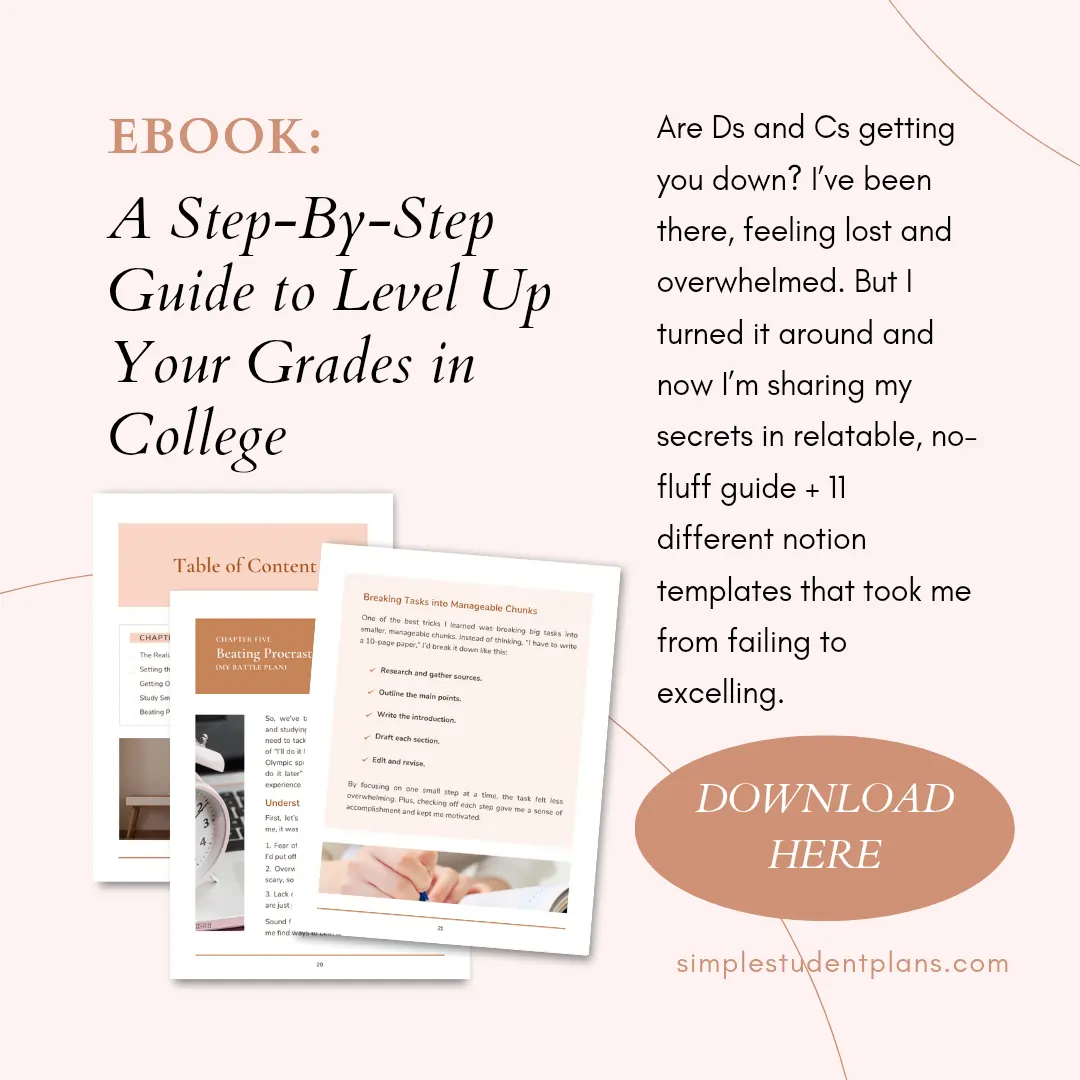
Step-by-Step Guide to Level Up Your Grades in College

13. Working in a Distracting Environment

Studying in the dorm lounge while friends are playing games is a recipe for failure.

Better options:

  • Library quiet zones
  • Coffee shops with good Wi-Fi
  • Study rooms on campus

Pro tip: Create a “study kit” with noise-canceling headphones, snacks, and chargers.

14. Not Setting Clear Goals

Without goals, it’s easy to drift through assignments without real motivation.

Example of a vague goal: “Do well in class.”
Better goal: “Score at least 85% in Biology by studying 3 hours weekly.”

15. Ignoring Mental Health

Pushing through stress, anxiety, or burnout only worsens productivity.

Signs you need support:

  • Constant fatigue
  • Losing interest in things you enjoy
  • Trouble focusing

Solution: Use campus counseling services or apps like BetterHelp.

16. Poor Time Management with Social Life

Parties, friends, and events are fun but not when they constantly interrupt important tasks.

Fix: Schedule social time after finishing key tasks. Treat it as a reward, not a distraction.

17. Not Asking for Help

Many students waste hours struggling alone when help is available.

Options for support:

  • Office hours with professors
  • Campus tutoring centers
  • Study groups

Remember: Asking for help is not weakness, it’s smart productivity.

18. Forgetting to Review and Reflect

One of the most overlooked productivity mistakes is not reflecting on what’s working and what isn’t.

Fix: At the end of each week, ask yourself:

  • What worked well?
  • What wasted my time?
  • What can I improve next week?

A simple reflection journal can keep you on track.

Mistakes vs. How to Fix It

Productivity MistakeWhy It HurtsHow to Fix It
ProcrastinationLeads to stress and poor gradesBreak tasks into small steps
No daily planWasted time, missed deadlinesUse a planner or time-blocking
MultitaskingLowers efficiencyFocus on one task at a time
Poor sleepReduces focus and memoryStick to a sleep routine
Skipping mealsLow energyEat balanced snacks and meals
No exerciseFatigue15-min workouts or walks
OvercommittingBurnoutLearn to say no
Bad tech useDistractionsUse productivity apps
CrammingPoor retentionUse spaced repetition
No breaksMental fatiguePomodoro or hourly breaks
Poor notesInefficient studyingUse structured methods
ComparisonsLow motivationFocus on self-growth
Distracting spaceNo focusFind quiet places
No goalsLack of directionSet SMART goals
Ignoring mental healthBurnoutSeek support, counseling
Social distractionsMissed deadlinesBalance with scheduling
Not asking for helpWasted timeUse tutors, professors
No reflectionRepeated mistakesWeekly self-review

FAQs About Productivity Mistakes in College

1. What is the biggest productivity mistake college students make?
Procrastination is the most common mistake. It leads to cramming, stress, and lower performance. Planning ahead and breaking tasks into chunks is the best fix.

2. How can I avoid distractions while studying?
Choose a quiet study environment, use apps to block social media, and keep your phone away during study sessions.

3. Do all-nighters really help?
No. Research shows sleep deprivation reduces memory and focus, making all-nighters counterproductive. You’ll actually perform worse.

4. How do I balance academics and social life without losing productivity?
Schedule social activities after completing priority tasks. Treat them as rewards, not interruptions.

Key Takeaways

  • Most students lose productivity because of bad habits, not lack of time.
  • Avoiding procrastination, multitasking, poor sleep, and overcommitment can free up hours each week.
  • Use tools like planners, productivity apps, and study techniques (Pomodoro, spaced repetition) to stay consistent.
  • Take care of your health; sleep, exercise, and mental well-being are crucial to productivity.
  • Reflect regularly to identify what’s working and improve your approach.

“Productivity isn’t about doing more things. It’s about doing the right things in the smartest way possible.”

By avoiding these 18 productivity mistakes, you’ll not only perform better academically but also create more time for the things you love about college.


9 Things Organized Students Do Differently

Being a student isn’t easy. Between lectures, assignments, group projects, exams, and maybe even part-time jobs, it can quickly feel overwhelming. Some students, however, seem to have everything under control. Their notes are tidy, their assignments are on time, and they still manage to make space for hobbies, friends, or even Netflix nights.

So, what’s their secret?


As an affiliate partner of various brands and sponsored content, SimpleStudentPlans may earn commission on qualifying purchases.   Disclaimer   |  Advertise With Us


It’s not about being naturally “gifted” at organization. Instead, it’s about adopting smart habits that set them apart from the rest. In this post, we’ll talk about 9 things organized students do differently and how you can apply these habits to your own academic life.

Whether you’re in high school, college, or grad school, these practical tips will help you stay on top of your workload, reduce stress, and actually enjoy your learning journey.

1. They Plan Ahead (and Stick to It)

One of the biggest differences between organized students and everyone else is their approach to planning.

Instead of waiting until the last minute, they:

  • Use planners or digital tools like Notion, Google Calendar, or even a good old-fashioned notebook.
  • Break down assignments into smaller tasks (research → outline → draft → edit).
  • Schedule study sessions just like appointments they can’t miss.

“Planning is bringing the future into the present so that you can do something about it now.” – Alan Lakein

Pro tip: If you’re a tactile learner, a physical planner like this academic planner can be a game-changer. If you’re more digital, apps with reminders and notifications can keep you accountable.

Example of a Weekly Student Planner Layout

DayTasksPriorityCompleted?
MondayRead Chapter 4, outline essayHigh
TuesdayGroup project meetingMedium
WednesdayReview flashcardsMedium
ThursdayWrite essay draftHigh
FridaySubmit assignmentHigh

2. They Create a Study Routine

Organized students don’t just study “whenever they feel like it.” They create routines that become second nature.

  • Fixed study hours – For example, two hours every evening after dinner.
  • Study rituals – Like clearing their desk, turning off distractions, and having a cup of tea nearby.
  • Consistency over intensity – Instead of cramming, they spread their study sessions across the week.

Think of it like going to the gym: you see results not from one long, exhausting session, but from consistent effort over time.

Try the Pomodoro Technique: Study for 25 minutes, take a 5-minute break, and repeat. Tools like Focus Booster can help.

3. They Keep Their Space (and Digital Life) Organized

A cluttered desk leads to a cluttered mind. Organized students know that an environment affects productivity.

Physical Space Habits:

  • Keep only essentials on the desk (laptop, notebook, pen).
  • Store supplies in drawers or organizers.
  • Do a 5-minute clean-up before or after studying.

Digital Space Habits:

  • Create clearly labeled folders on their laptop.
  • Use cloud storage (Google Drive, Dropbox) to avoid losing files.
  • Turn off distracting notifications while working.

Invest in simple desk organizers like this affordable set. It may sound small, but having a clean desk makes sitting down to study so much easier.

4. They Prioritize, Don’t Just “Do It All”

Organized students don’t try to do everything at once. They use prioritization strategies to focus on what matters most.

Two methods they often use:

  • Eisenhower Matrix:
    • Urgent + Important → Do now
    • Important + Not Urgent → Schedule
    • Urgent + Not Important → Delegate (if possible)
    • Not Urgent + Not Important → Drop
  • MITs (Most Important Tasks): Pick 2–3 key things to finish each day.

Example of Prioritization

TaskCategoryAction
Essay due tomorrowUrgent + ImportantDo now
Exam in 2 weeksImportant + Not UrgentSchedule study time
Club meetingUrgent + Not ImportantDecide if attendance is necessary
Scrolling TikTokNot ImportantDrop

5. They Use Smart Note-Taking Methods

Instead of copying everything word-for-word, organized students use note-taking methods that make reviewing easier later.

Popular methods include:

  • Cornell Method – Divide page into cues, notes, and summary.
  • Outline Method – Use bullet points and indentation.
  • Mind Mapping – Create visual diagrams for connections.

Tools like GoodNotes (iPad app) or a digital stylus can make note-taking more engaging.

Example of the Cornell Method layout:

CueNotesSummary
Key conceptDetailed explanationShort summary of page
Step-by-Step Guide to Level Up Your Grades in College

6. They Avoid Multitasking

It may feel productive to “study while texting” or “write an essay while watching TV,” but science shows multitasking reduces focus and memory retention.

Organized students:

  • Work in single-task mode.
  • Use timers to stay on track.
  • Batch similar tasks together (e.g., responding to emails all at once).

Try apps like Forest (which grows a virtual tree while you stay focused).

7. They Make Time for Rest and Self-Care

Being organized doesn’t mean working 24/7. In fact, burnout makes you less productive.

Organized students:

  • Prioritize sleep (at least 7–8 hours).
  • Take breaks and practice hobbies.
  • Exercise or at least stretch between study sessions.

“Almost everything will work again if you unplug it for a few minutes… including you.” – Anne Lamott

A relaxed brain learns faster and remembers better.

8. They Ask for Help (Instead of Struggling Alone)

Organized students know when to seek guidance. Instead of waiting until it’s too late, they:

If you’re shy about asking in class, email your professor. Many students forget that professors want you to succeed.

9. They Reflect and Adjust Their Strategies

Lastly, organized students regularly reflect on what’s working and what’s not.

They ask themselves:

  • Did I meet my study goals this week?
  • What distracted me most?
  • How can I improve next week?

This continuous cycle of reflection and adaptation helps them stay flexible and effective.

Key Takeaways

  • Planning and routines make a huge difference.
  • Clean spaces = clear mind.
  • Prioritization is the secret to avoiding overwhelm.
  • Single-tasking > multitasking.
  • Rest, reflection, and support are just as important as study time.

By adopting even a few of these things organized students do differently, you’ll notice more productivity, less stress, and better results in your academic life.

FAQ: Things Organized Students Do Differently

Q1: Do I need to be naturally organized to succeed in school?
No! Organization is a skill anyone can learn. Start small with one habit (like using a planner) and build from there.

Q2: How long does it take to become more organized as a student?
It depends on consistency. Most students see results within a few weeks of sticking to routines and strategies.

Q3: What tools should I invest in first?
Start with a planner (digital or physical), a few desk organizers, and reliable cloud storage. You don’t need expensive tools to get organized.

Q4: Can I still be organized if I’m naturally messy?
Yes! Organization is more about systems than personality. Even if you’re messy by nature, having routines and checklists can keep you on track.

Final Thoughts

The habits of organized students aren’t magic, they’re intentional practices that anyone can adopt. By planning ahead, creating systems, and making time for balance, you’ll find yourself not just keeping up with your studies, but thriving.

So, which habit will you start with today?

10 Productivity Challenges to Try This Semester

Starting a new semester often feels like opening a fresh notebook, clean, exciting, and full of possibilities. But let’s be honest: no matter how motivated we are in the first week, staying consistent with productivity throughout the semester can be tough. Between classes, assignments, social life, and maybe even a part-time job, things pile up fast.


As an affiliate partner of various brands and sponsored content, SimpleStudentPlans may earn commission on qualifying purchases.   Disclaimer   |  Advertise With Us


That’s where a productivity challenge comes in. A productivity challenge isn’t about working harder every second of the day. Instead, it’s about testing small habits, building consistency, and learning what works best for you. When you commit to a challenge, you give yourself structure, accountability, and a fun way to improve your daily routine.

In this post, we’ll discuss 10 productivity challenges you can try this semester. Each challenge is practical, beginner-friendly, and flexible enough to fit your student lifestyle. Whether you want to get better at managing your time, reducing distractions, or staying organized, you’ll find something here that works for you.

Let’s dive in!

Why Productivity Challenges Work

Before we get into the actual challenges, let’s quickly talk about why these little experiments can be game-changers:

  • They build habits through consistency. Instead of vague goals like “I’ll be more productive this semester”, challenges give you specific actions to practice daily.
  • They make productivity fun. Turning self-improvement into a challenge feels more like a game and less like homework.
  • They help you learn what works. You might discover that a 25-minute Pomodoro study session works better than 1-hour blocks, or that waking up earlier gives you more mental clarity.
  • They create accountability. When you set a clear challenge (and maybe even share it with a friend), you’re more likely to stick with it.

Think of them as short experiments that help you unlock your personal productivity style.

The 10 Productivity Challenges

Here are ten challenges designed specifically with students in mind. You don’t have to do all of them at once. Pick one or two to start, and once they become habits, move on to the next.

1. The 30-Day Time-Blocking Challenge

What it is:
Time blocking means planning your day in chunks of time instead of making a simple to-do list. Each block is dedicated to one type of task; studying, gym, lectures, rest, etc.

How to do it:

  • At the start of each day, open Google Calendar or a paper planner.
  • Divide your day into 1–2 hour blocks.
  • Assign each block a task (e.g., 9–11 AM: Review biology notes).
  • Stick to the plan as much as possible.

Why it works:
It forces you to be intentional with your time and reduces decision fatigue. Instead of wondering “What should I work on now?”, you’ll already know.

Pro tip: Try Notion or Google Calendar to create digital time blocks you can drag and drop.

2. The 25-Day Pomodoro Sprint

What it is:
The Pomodoro Technique is a famous productivity method where you study for 25 minutes, then take a 5-minute break. After four rounds, you take a longer 15–30 minute break.

How to do it:

  • Pick a task.
  • Set a 25-minute timer (you can use the Focus To-Do app).
  • Work without distractions.
  • Take a 5-minute break. Repeat.

Why it works:
Short bursts of focus are easier to sustain than marathon study sessions. It also helps if you tend to procrastinate.

Challenge yourself: Try doing four Pomodoro sessions per day for 25 days straight.

3. The Digital Detox Challenge (7 Days)

What it is:
Limit your use of distracting apps and social media for a week.

How to do it:

  • Use app blockers like Freedom or Forest.
  • Turn off unnecessary notifications.
  • Set specific times to check social media (e.g., only 20 minutes at night).

Why it works:
Phones are one of the biggest productivity killers. Cutting back helps you stay focused and more present in your work.

Pro tip: Replace scrolling time with something refreshing, like a quick walk, journaling, or a podcast.

4. The “No All-Nighters” Challenge (Semester-Long)

What it is:
Commit to never pulling an all-nighter this semester.

How to do it:

  • Stick to a bedtime routine.
  • Review notes daily instead of cramming.
  • Use flashcards apps like Quizlet for small, frequent study sessions.

Why it works:
Research shows that sleep improves memory, focus, and problem-solving. By protecting your sleep, you’ll perform better academically and feel healthier.

5. The Morning Routine Challenge (21 Days)

What it is:
Set a consistent morning routine for 21 days.

How to do it:

  • Wake up at the same time daily.
  • Do something energizing: stretching, journaling, or a quick workout.
  • Avoid checking your phone for the first 30 minutes.
  • Plan your top three priorities for the day.

Why it works:
A strong morning routine sets the tone for a productive day. Instead of rushing, you’ll start calm and in control.

6. The 10-Minute Declutter Challenge (14 Days)

What it is:
Spend just 10 minutes a day decluttering your workspace or digital files.

How to do it:

  • Day 1: Clean your desk.
  • Day 2: Organize your backpack.
  • Day 3: Sort through old class notes.
  • Day 4: Delete unnecessary files on your laptop.

Why it works:
A messy space = a messy mind. Keeping things organized helps reduce stress and saves you time when searching for materials.

7. The “Top 3 Priorities” Challenge (30 Days)

What it is:
Instead of overwhelming yourself with endless to-dos, pick just three key priorities each day.

How to do it:

  • Each morning, write down your top three tasks.
  • Work on them first before anything else.
  • Treat everything else as bonus productivity.

Why it works:
This challenge teaches you to focus on what truly matters, not just staying busy.

8. The 1-Hour Deep Work Challenge (30 Days)

What it is:
Dedicate at least one uninterrupted hour daily to deep work—serious studying or project work with zero distractions.

How to do it:

  • Silence your phone.
  • Use noise-canceling headphones or ambient study music.
  • Tell friends/roommates you’re not available for that hour.

Why it works:
Deep work helps you produce high-quality results in less time compared to multitasking.

Step-by-Step Guide to Level Up Your Grades in College

9. The Note-Taking Method Challenge (14 Days)

What it is:
Test out different note-taking methods for 2 weeks to see which improves your retention and organization.

Methods to try:

Why it works:
Strong notes make exam prep 10x easier. This challenge helps you find the best method for your learning style.

10. The Accountability Partner Challenge (Semester-Long)

What it is:
Pair up with a friend or classmate to keep each other accountable.

How to do it:

  • Share your weekly goals.
  • Check in once or twice a week.
  • Celebrate wins and help each other stay on track.

Why it works:
When someone else is counting on you, you’re more likely to show up and stay consistent.

How to Choose the Right Challenge

Not every productivity challenge will fit your lifestyle. Here are a few tips for choosing the right one:

Challenge TypeBest ForCommitmentTools Needed
Time-BlockingStudents with busy schedulesDailyPlanner/Calendar
PomodoroProcrastinators or easily distracted25 daysTimer app
Digital DetoxSocial media scrollers7 daysApp blockers
No All-NightersChronic crammersWhole semesterBedtime routine
Morning RoutineStudents who feel rushed21 daysAlarm clock
DeclutterMessy desk warriors14 daysNone
Top 3 PrioritiesOverwhelmed multitaskers30 daysNotebook
Deep WorkSerious project workers30 daysQuiet space
Note-TakingVisual/organized learners14 daysNotebook/Apps
Accountability PartnerTeam playersSemester-longA friend

My Experience with the Pomodoro Challenge

During my sophomore year, I tried the Pomodoro Challenge for exam prep. At first, it felt silly setting a timer, but I quickly noticed that the urgency made me focus. I couldn’t waste time because the clock was ticking. After a week, I doubled the amount of material I could review in a day. The short breaks also prevented burnout, I’d do a quick stretch or grab water, then come back refreshed. By the end of the semester, it became my go-to study method.

Key Takeaways

  • A productivity challenge is a fun and effective way to test new habits.
  • Challenges like time-blocking, Pomodoro sessions, and digital detoxing help you stay consistent.
  • Not all challenges fit every lifestyle, pick one or two that align with your needs.
  • The goal isn’t perfection, it’s building sustainable habits that support your academic and personal growth.

Frequently Asked Questions (FAQ)

1. How long should a productivity challenge last?
Most challenges last between 7–30 days. That’s enough time to test the habit and see if it works for you. Some, like accountability partners or avoiding all-nighters, can last the entire semester.

2. Can I do multiple productivity challenges at once?
Yes but don’t overwhelm yourself. Start with one or two, then layer others in once you feel comfortable.

3. What if I fail a challenge?
It’s not failure, it’s feedback. The goal of a productivity challenge is to learn what works for you. Simply adjust and try again.

4. Do I need special tools for these challenges?
Not at all. While apps and planners can help, most challenges only require discipline and consistency.

Final Thoughts

Trying a productivity challenge is one of the easiest ways to improve your habits this semester. They give structure, accountability, and a sense of fun to self-improvement. Start with one that excites you, stick with it for at least two weeks, and watch how it transforms your daily routine.

Don’t forget: productivity isn’t about doing more, it’s about doing what matters most.

How to Create a Weekly Study Schedule: A Step-By-Step Guide

Do you ever feel like there’s just never enough time to study? Between lectures, assignments, group projects, part-time jobs, and personal life, finding balance can feel impossible. The truth is, most students don’t lack time, they lack a plan. That’s where a weekly study schedule comes in.


As an affiliate partner of various brands and sponsored content, SimpleStudentPlans may earn commission on qualifying purchases.   Disclaimer   |  Advertise With Us


In this post, you’ll learn exactly how to create a weekly study schedule that works for your life, helps you stay consistent, and prevents last-minute cramming. Whether you’re a high school student, college student, or lifelong learner, this guide will give you the tools to organize your week like a pro.

Why You Need a Weekly Study Schedule

Before we jump into the “how,” let’s talk about the “why.” Why should you bother setting up a weekly study schedule instead of just studying whenever you feel like it?

Here are a few reasons:

  • Consistency matters: Regular study builds stronger memory than cramming.
  • Reduces stress: You’ll know exactly when and what to study instead of panicking before exams.
  • Better time management: You can balance studying with hobbies, work, and self-care.
  • Clear priorities: A schedule ensures you don’t forget assignments or leave projects until the last minute.

Think of a weekly study schedule as your personal roadmap to success.

Step 1: Assess Your Time

The first step in creating a weekly study schedule is to know your available time. You can’t plan effectively without understanding your commitments.

Take out a blank sheet of paper or open a digital planner (I recommend Notion or Google Calendar).

List all your fixed commitments:

  • Class times and labs
  • Work shifts
  • Sports practice or extracurricular activities
  • Religious or family obligations
  • Sleep (aim for 7–8 hours nightly)

Now, subtract these from your week. The leftover hours are your study blocks.

Example Table of Time Commitments

DayFixed CommitmentsFree Study Hours
Monday9am–2pm classes, 5–8pm work3 hours
Tuesday11am–4pm classes4 hours
Wednesday9am–12pm class, 6–9pm practice5 hours

Step 2: Set Clear Study Goals

A schedule without goals is like driving without a destination. Before you plan your week, ask:

  • What subjects need the most attention?
  • What deadlines are coming up?
  • How many hours should you dedicate per subject?

SMART Goals Example

  • Instead of: “Study biology this week.”
  • Use: “Review Chapters 3–4 in biology textbook, complete flashcards, and solve 20 practice questions by Friday.”

Setting goals keeps your study sessions focused and measurable.

Step 3: Break Down Your Subjects

Not all subjects are equal. Some require more reading, others require practice problems, and others need project work.

Here’s how to prioritize:

  • High priority: Difficult subjects or those with upcoming exams.
  • Medium priority: Moderate effort subjects with regular assignments.
  • Low priority: Subjects you’re already confident in.

Example Breakdown:

  • Math: 6 hours/week (practice problems, review formulas)
  • Biology: 4 hours/week (flashcards, textbook reading)
  • English: 3 hours/week (essays, reading)
  • History: 2 hours/week (summarizing lectures)

Step 4: Choose Your Study Blocks

Once you know your subjects and priorities, it’s time to decide when to study.

Morning vs. Evening Study

  • Morning: Great for deep focus, memorization, and tough subjects.
  • Evening: Good for reviewing notes or lighter tasks.

Ideal Study Block Length

Research suggests:

  • 25–50 minutes of study followed by a 5–10 minute break (Pomodoro Technique).
  • After 3–4 blocks, take a longer 30–60 minute break.

Step 5: Create Your Weekly Study Schedule Template

Here’s an example weekly study schedule template (feel free to copy and customize):

TimeMondayTuesdayWednesdayThursdayFridaySaturdaySunday
8–9 AMMath problemsBiology notesMath reviewEnglish essayHistory notesMath drillsReview week
9–10 AMMath problemsBiology notesMath reviewEnglish essayHistory notesMath drillsReview week
2–3 PMEnglish essayFreeBiology flashcardsMath formulasFreeProject workRelaxation
5–6 PMBiology notesHistory reviewFreeFreeEnglish essayFreeFree

You can also use this customizable planner to build your schedule digitally.

Step 6: Be Realistic

One of the biggest mistakes students make is overloading their schedule. You’re not a robot, you need time to eat, rest, and recharge.

Tips for realistic scheduling:

  • Don’t plan more than 6 hours of intense studying per day.
  • Include buffer time for unexpected events.
  • Keep weekends flexible for catch-up or review.

Step 7: Stick to Your Schedule (and Adjust When Needed)

A schedule only works if you follow it. Here’s how to stay consistent:

  • Set reminders: Use calendar notifications or apps like Todoist.
  • Track progress: Cross off completed tasks, it feels rewarding!
  • Review weekly: Every Sunday, reflect: What worked? What didn’t? Adjust as needed.

Remember: A schedule is a tool, not a prison. If something isn’t working, change it.

Step-by-Step Guide to Level Up Your Grades in College

Extra Tips for a Successful Weekly Study Schedule

Here are some bonus strategies to make your study schedule more effective:

1. Use Color Coding

  • Blue for classes
  • Green for study time
  • Red for deadlines
  • Yellow for free time

2. Batch Similar Tasks

Do all readings in one block, practice problems in another. This reduces mental switching.

3. Plan Rewards

Finish a study block? Treat yourself with a snack, short walk, or favorite show.

4. Stay Organized

Use tools like:

Common Mistakes to Avoid

  • Overloading your schedule: Leads to burnout.
  • Skipping breaks: Your brain needs rest.
  • Ignoring priorities: Don’t waste hours on subjects you already know well.
  • Being too rigid: Life happens—be flexible.

FAQ: Weekly Study Schedule

1. How many hours a week should I study?
It depends on your workload. A common rule is 2–3 hours of study per hour of class time. For example, if you have 12 class hours, aim for 24–36 study hours.

2. Should I study every day?
Yes, but that doesn’t mean long hours daily. Even short daily sessions keep your brain active and reduce cramming.

3. What if I fall behind on my schedule?
Don’t stress. Use weekends or flexible blocks to catch up. The goal is progress, not perfection.

4. Can I use digital or paper planners?
Either works! Digital planners (like Notion, Google Calendar) are great for flexibility. Paper planners are great for those who prefer writing things down.

Key Takeaways

  • A weekly study schedule helps you stay consistent, organized, and less stressed.
  • Start by assessing your time commitments and setting clear study goals.
  • Break down subjects, assign study blocks, and use realistic time frames.
  • Stay flexible, adjust your schedule each week to reflect your real life.
  • Use tools like planners, apps, and color-coding to stay on track.

The secret is not about studying harder but studying smarter with a plan.

Final Note: Creating a weekly study schedule may take effort at first, but once you build the habit, it becomes second nature. Start small, be consistent, and watch how your productivity (and grades) improve.

7 Productive Study Routines Every College Student Should Try This Semester

College life is busy. Between lectures, assignments, part-time jobs, and social events, it’s easy to feel like there’s never enough time to study effectively. But the truth is, being successful in college isn’t about studying the longest, it’s about studying the smartest. That’s where having a productive study routine makes all the difference.


As an affiliate partner of various brands and sponsored content, SimpleStudentPlans may earn commission on qualifying purchases.   Disclaimer   |  Advertise With Us


If you’ve ever wondered how top students seem to balance it all while still getting good grades, the secret lies in routines that boost focus, energy, and consistency. The good news? You don’t need to overhaul your entire life to create a study plan that works. With the right habits and a little discipline, you can transform the way you learn this semester.

In this post, we’ll cover 7 productive study routines that every college student should try. We’ll also explore how to build habits that stick, tools to make studying easier, and ways to keep your motivation high.

Why a Productive Study Routine Matters

A productive study routine isn’t just about cramming in more hours. It’s about:

  • Maximizing focus so you retain more information in less time.
  • Reducing procrastination by creating a predictable schedule.
  • Improving long-term memory through consistent practice.
  • Building balance between academics and personal life.

Think of it this way: athletes don’t just show up on game day and hope for the best, they follow training routines. Similarly, productive students create study routines that prepare them for exams, projects, and daily learning.

1. The Pomodoro Study Routine

If you struggle with procrastination or staying focused, the Pomodoro Technique is a game-changer.

How It Works:

  1. Set a timer for 25 minutes and study without distractions.
  2. Take a 5-minute break (stretch, grab water, or check your phone briefly).
  3. After four cycles, take a longer break (15–30 minutes).

This simple system prevents burnout and makes overwhelming tasks feel manageable.

Why It Works:

  • Our brains can only focus intensely for short bursts.
  • The built-in breaks help you recharge.
  • It creates a sense of urgency that pushes you to start tasks.

Tools That Help:

  • Forest App (grow a virtual tree while you focus).
  • A basic kitchen timer or your phone’s timer app.

Tip: Pair this with noise-canceling headphones and lo-fi study playlists on YouTube or Spotify.

2. Morning Power Hour

Starting your day with a study power hour sets the tone for productivity.

What It Looks Like:

  • Wake up, have a light breakfast, and spend one focused hour on studying before classes or distractions take over.
  • Use this time for reviewing notes, reading, or working on assignments.

Why It Works:

  • Your mind is fresh in the morning.
  • It reduces stress since you start the day already feeling accomplished.
  • Builds momentum for the rest of the day.

Pro Tip:

If mornings feel impossible, try adjusting your sleep schedule gradually. Even just 30 minutes earlier can make a big difference.

3. Active Recall and Spaced Repetition Routine

Instead of rereading your notes (which feels productive but isn’t), use active recall and spaced repetition; two scientifically proven methods to improve memory.

Active Recall:

  • Close your notes and try to recall the information from memory.
  • Test yourself with flashcards, practice questions, or by explaining the topic out loud.

Spaced Repetition:

  • Review information at increasing intervals (e.g., 1 day, 3 days, 1 week, 1 month).
  • This strengthens long-term memory.

Tools to Use:

  • Anki (free flashcard software).
  • Quizlet for collaborative flashcards.

Why It Works:

Research shows that the act of retrieving information is more effective than just rereading. Spaced repetition keeps knowledge fresh right before you’re likely to forget it.

4. Themed Study Days

If you constantly switch between subjects, you may be wasting brainpower on context switching. Instead, dedicate specific days or blocks of time to one subject.

Example:

  • Monday: Math + Statistics
  • Tuesday: History + Literature
  • Wednesday: Science Labs
  • Thursday: Writing + Projects
  • Friday: Review

Why It Works:

  • Helps you dive deep into a subject without mental clutter.
  • Builds consistency in reviewing each subject weekly.
  • Reduces the feeling of being pulled in multiple directions.

Bonus:

This is especially effective if you’re juggling multiple classes with heavy workloads.

5. The Study-Workout Combo

Exercise and studying may seem unrelated, but combining the two boosts productivity.

Step-by-Step Guide to Level Up Your Grades in College

How to Do It:

  • Study for 45–60 minutes.
  • Take a 15-minute workout break (walk, stretch, or quick yoga).
  • Get back to studying refreshed.

Why It Works:

  • Physical activity increases blood flow to the brain.
  • Breaks up long study sessions.
  • Reduces stress and helps with focus.

Tools That Help:

  • YouTube quick workouts (e.g., 10-minute yoga or HIIT).
  • Fitness apps like Nike Training Club.

6. Group Study Routine

Sometimes studying alone can feel isolating. A structured group study routine can help.

How It Works:

  • Gather 2–4 classmates.
  • Set clear goals (e.g., review Chapter 3, quiz each other, solve past papers).
  • Keep the group accountable with timers and breaks.

Benefits:

  • Explaining concepts helps deepen understanding.
  • You get different perspectives and problem-solving methods.
  • Keeps you motivated (and less likely to procrastinate).

Pro Tip:

Avoid turning study groups into social hangouts. Stick to the plan first, then reward yourselves after.

7. Nightly Review Routine

End your day with a 15–30 minute review session.

What It Looks Like:

  • Go over lecture notes.
  • Summarize key points in your own words.
  • Create a to-do list for tomorrow.

Why It Works:

  • Strengthens memory before sleep (your brain consolidates learning overnight).
  • Reduces last-minute cramming.
  • Helps you stay organized and prepared.

Extra Tips for Building a Productive Study Routine

Here are some additional habits to supercharge your routines:

Use a Study Planner

A planner or digital tool helps you stay on track.

Optimize Your Study Space

  • Choose a quiet, clutter-free spot.
  • Keep essentials (pens, notebooks, water) nearby.
  • Use good lighting to reduce eye strain.

Eliminate Distractions

  • Turn off notifications.
  • Use website blockers like Freedom.
  • Keep your phone out of reach if possible.

Reward Yourself

  • Small rewards (snack, short walk, episode of your favorite show) keep motivation high.

Example Study Routine Schedule

Here’s a sample weekly study routine using the strategies above:

DayRoutine Example
MondayMorning Power Hour + Pomodoro sessions (Math & Stats)
TuesdayGroup study + Active Recall with flashcards
WednesdayStudy-Workout Combo (Science & Labs)
ThursdayPomodoro + Writing Projects (Themed study)
FridayMorning Review + Long Spaced Repetition Session
SaturdayCatch-up + 1 major assignment block
SundayLight review + planning for next week

Key Takeaways

  • A productive study routine is about working smarter, not longer.
  • Pomodoro boosts focus, while active recall + spaced repetition strengthen memory.
  • Routines like morning power hours and nightly reviews create consistency.
  • Group study and exercise breaks add variety and motivation.
  • The best routine is one you can stick to; consistency matters more than perfection.

FAQs

1. How many hours should a college student study daily?

It depends on your course load, but most students benefit from 2–4 focused hours daily. The key is quality, not just quantity.

2. Is it better to study in the morning or at night?

It depends on your energy levels. Some students are morning learners, others are night owls. The most important thing is to study when you can focus best.

3. How do I stop procrastinating when studying?

Use small steps: set a timer, break tasks into chunks, and remove distractions. The Pomodoro Technique is especially effective for overcoming procrastination.

4. What is the most effective study method?

Research consistently shows that active recall and spaced repetition are the most effective for long-term learning. Pair them with a solid routine for the best results.

Final Thoughts

Every student learns differently, but what all successful students share is consistency. Building a productive study routine this semester can help you save time, reduce stress, and achieve better results without burning out.

Start small. Pick just one or two of these routines to try this week. Once they become habits, add more. Soon enough, you’ll find yourself studying smarter, staying organized, and actually enjoying the process.

15 Exam Preparation Tips That Will Save Your GPA

If you’ve ever stared at your notes the night before an exam, panicked, and thought, “Why didn’t I start earlier?” — trust me, you’re not alone.

Exams can feel overwhelming, but the good news is that with the right exam preparation tips, you can study smarter (not harder) and save your GPA from crashing.

I’ll share 15 exam preparation tips that I’ve personally tried (and wish I’d known earlier in college). These tips are easy to follow and will help you walk into your exams more confident, less stressed, and way more prepared.


As an affiliate partner of various brands and sponsored content, SimpleStudentPlans may earn commission on qualifying purchases.   Disclaimer   |  Advertise With Us


So grab your coffee, open your planner, and let’s dive into how to actually prepare for exams the right way.

Why Exam Preparation Matters

Exams can make or break your GPA. One bad grade might not seem like the end of the world, but if it keeps happening, it can drag down your average quickly.

The truth is, exam preparation isn’t just about passing, it’s about showing what you’ve learned, keeping your GPA healthy, and reducing stress.

When you prepare well:

  • You save yourself from last-minute cramming.
  • You retain information longer.
  • You build confidence for the test.
  • You protect your GPA (and your sanity).

Now let’s get into the practical stuff.

1. Start Early (Seriously, Don’t Wait)

I know it’s tempting to procrastinate, but starting early is the best exam prep hack ever. When you begin studying a week or two before exams, you can break things down into smaller chunks.

Instead of binge-studying 10 chapters in one night, you’ll only need to tackle a little each day. Trust me, your brain will thank you.

Pro tip: Use a study calendar. Write out which topics you’ll cover each day leading up to the exam. Even 30 minutes daily makes a huge difference.

2. Make a Study Schedule and Stick to It

Here’s something I learned the hard way: wishing you’ll study is not the same as actually studying.

Create a realistic study timetable. Block out specific hours for study sessions, breaks, meals, and even downtime.

Here’s an example of a 3-day exam countdown schedule:

TimeDay 1Day 2Day 3 (Exam Day)
9–11amReview Lecture NotesPractice ProblemsQuick Revision
12–1pmLunch/BreakLunch/BreakLunch/Break
1–3pmFlashcards & QuizzesMock TestReview Key Terms
4–6pmGroup StudyRevise Weak AreasRelax & Light Reading
EveningChill/ExerciseLight ReviewSleep Early

Scheduling helps you avoid wasting hours deciding “what should I study today?”

3. Find Your Best Study Environment

Some people study best in total silence, while others need a little background noise. Personally, I like a quiet corner in the library, but my roommate swears by coffee shops.

Experiment and figure out where you focus best. Then make that your go-to exam prep spot.

Avoid distractions: Turn off notifications or use apps like Forest or StayFocusd to stay off social media.

4. Use Active Recall Instead of Just Reading

Rereading notes feels productive, but it’s not the best way to retain information. Instead, use active recall—test yourself without looking at your notes.

Here’s how:

  • Close your book and try to write down everything you remember.
  • Quiz yourself with flashcards.
  • Cover the answers and explain concepts out loud.

When you force your brain to remember information, you strengthen those memory connections.

5. Practice with Past Questions

If your professor provides past papers or sample questions, use them! They’re literally a sneak peek into the exam style.

When I first tried past questions, I realized how different the exam was compared to my notes. It helped me understand what areas to focus on and how to answer in the right format.

Tip: Even if you don’t have official past papers, create your own mock test by guessing what questions could come up.

6. Break Big Topics into Smaller Chunks

Staring at an entire textbook is intimidating. Instead, break topics into smaller, bite-sized chunks.

For example, instead of “Study Chapter 10,” write:

  • Learn definitions in section 10.1
  • Review examples in section 10.2
  • Practice problems from 10.3

This makes studying less overwhelming and more manageable.

7. Use the Pomodoro Technique

Long study marathons can make you tired and unfocused. That’s where the Pomodoro Technique comes in:

  • Study for 25 minutes.
  • Take a 5-minute break.
  • Repeat 4 times, then take a longer 15–30 minute break.

This method keeps you energized and prevents burnout.

8. Teach Someone Else

One of the best exam prep methods? Teach the material to someone else.

Grab a study buddy (or even your pet or a stuffed animal) and explain the topic in simple terms. If you can teach it clearly, you truly understand it.

I once explained a history chapter to my younger brother, and it stuck with me way better than just reading.

Step-by-Step Guide to Level Up Your Grades in College

9. Use Visual Study Tools

Sometimes words just don’t cut it. Try using diagrams, charts, and mind maps to visualize concepts.

For example:

  • Create flowcharts for processes.
  • Use tables to compare theories.
  • Draw mind maps to connect big ideas.

Visual aids help you see the bigger picture instead of memorizing random facts.

10. Prioritize Weak Areas First

It’s easy to spend hours on topics we already understand, but exams test everything. Focus first on the areas you struggle with.

Make a list of your weak topics and dedicate extra time to them. Once you’ve improved there, revise your stronger areas for reinforcement.

11. Form a Study Group (But Stay Focused)

Study groups can be powerful if done right. You can share notes, quiz each other, and explain tricky concepts.

Warning: Study groups can also turn into gossip sessions. Keep the group small (3–5 people) and set an agenda before meeting.

12. Stay Healthy While Studying

Your brain works better when your body is taken care of. During exam prep:

  • Sleep well (don’t pull all-nighters).
  • Eat brain foods like nuts, fruits, and whole grains.
  • Stay hydrated—water > energy drinks.
  • Move around (stretch or take a walk during breaks).

13. Use Technology Wisely

There are tons of apps and tools that can make exam prep easier:

If you’re into digital planners, you can also check out this student-friendly planner. Having a planner can seriously help you stay on top of study sessions.

14. Manage Stress Before Exams

Anxiety can ruin all your preparation. Learn how to calm your nerves before the big day:

  • Take deep breaths.
  • Meditate for 5 minutes.
  • Avoid comparing yourself to others.
  • Focus on progress, not perfection.

15. Review, Don’t Cram

Finally, the golden rule: don’t cram. The night before your exam, focus on light revision: flashcards, summaries, or key terms.

Cramming might work for a short quiz, but for big exams, you’ll forget half the stuff once you sit down. Stick to review, sleep early, and walk into the exam rested.

Key Takeaways

  • Start early and create a study plan to avoid last-minute panic.
  • Use active recall, past papers, and teaching others to truly understand material.
  • Break topics into chunks, use visual tools, and focus on weak areas.
  • Stay healthy with good sleep, diet, and stress management.
  • Review lightly before the exam instead of cramming.

Your GPA depends on consistent, smart exam preparation, not stress-filled cramming.

Step-by-Step Guide to Level Up Your Grades in College

FAQ: Exam Preparation

1. How many hours should I study for exams each day?
It depends on your schedule, but 2–4 focused hours per day in the week leading up to exams is usually enough if you start early. Quality matters more than quantity.

2. Is it better to study at night or in the morning?
It’s about your personal energy levels. If you’re a night owl, study in the evenings. If you’re a morning person, stick to mornings. Just avoid all-nighters.

3. How do I stop procrastinating while studying?
Break tasks into small goals, use the Pomodoro technique, and remove distractions (like your phone). Reward yourself after completing sessions.

4. Are study groups really helpful?
Yes—if they’re focused. Keep the group small and set goals before meeting to avoid wasting time.

5. What should I do the night before an exam?
Do light review, prepare your materials (ID, pens, calculator), and go to bed early. A rested brain performs way better than a tired one.

Final Thoughts

Exam preparation doesn’t have to feel impossible. With these 15 tips, you can prepare smartly, protect your GPA, and feel way more confident when exam day comes around. Remember, it’s not about how long you study, it’s about how effectively you study.

So, pick one tip to start today, set up your exam prep plan, and take control of your GPA!

11 Tips for Saving Money in College: A Comprehensive Guide

College is one of the most exciting stages of life but it’s also one of the most expensive. Between tuition, books, rent, food, and endless little expenses, money seems to disappear faster than a freshman’s meal points. If you’ve ever looked at your bank account and thought, “Where did it all go?”, you’re not alone.

The good news is that you can take control of your finances without giving up all the fun. This is why I want to share 11 smart tips for saving money in college. These are real, doable ideas to help you stretch your budget, avoid unnecessary debt, and still enjoy your college years.

Whether you’re living in a dorm, off-campus, or commuting, these tips can save you hundreds (if not thousands) each year.


As an affiliate partner of various brands and sponsored content, SimpleStudentPlans may earn commission on qualifying purchases.

Disclaimer


Why Saving Money in College Matters

Before we get into the tips, let’s address the big “why.”

Many students graduate with tens of thousands of dollars in debt. According to the Federal Reserve, the average student loan balance in the U.S. is over $37,000. On top of loans, credit card debt is another trap that can stick around for years after graduation.

By learning how to save money now:

  • You’ll graduate with less debt.
  • You’ll reduce financial stress during school.
  • You’ll develop lifelong money habits.

1. Create (and Stick to) a Realistic Budget

Budgeting might sound boring, but it’s the single most important tip for saving money in college. Without one, it’s easy to overspend without realizing.

How to Create a College Budget

  1. List your income (scholarships, part-time job, allowance, loans).
  2. Track your expenses for at least one month (use an app like Mint or YNAB).
  3. Categorize your spending: rent, food, transportation, entertainment, etc.
  4. Set limits for each category.
  5. Adjust monthly as needed.

Here’s a simple example:

Category Monthly Budget Actual Spending
Rent & Utilities $600 $590
Groceries $200 $215
Eating Out $100 $120
Transportation $80 $75
Entertainment $60 $50
Savings $50 $50
Total $1,090 $1,100

Pro Tip: Use student-friendly budgeting apps. Many offer free versions, and some banks (like Chime) have built-in budgeting tools.

2. Buy Used (or Digital) Textbooks

One of the biggest money drains in college? Textbooks. A single new textbook can cost $150–$300, and by the end of the semester, it often collects dust.

Smarter Textbook Strategies

  • Buy used from sites like ThriftBooks or AbeBooks.
  • Rent instead of buy from Chegg or Amazon Textbook Rentals.
  • Go digital: eBooks and PDF versions are often cheaper.
  • Use your library: many colleges keep copies of required books.

“I once saved $400 in a single semester by renting instead of buying my textbooks new.”

3. Take Advantage of Student Discounts Everywhere

Your student ID is basically a magic card for savings. Tons of companies offer student discounts, but many students forget to use them.

Popular Student Discounts

  • Streaming & Entertainment:
    • Spotify + Hulu student bundle
    • Amazon Prime Student (6 months free, then 50% off)
  • Technology:
    • Apple and Dell offer student pricing
    • Microsoft Office is often free through your school
  • Food & Retail:
    • Chipotle, Subway, and many local restaurants offer 10–15% off with a student ID
    • Clothing stores like ASOS, J.Crew, and Nike have discounts

Use UNiDAYS (free student discount app) to find deals.

4. Cook at Home Instead of Eating Out

Let’s be honest: dining halls aren’t always appealing, and takeout is convenient. But eating out is one of the fastest ways to drain your budget.

  • Average fast food meal: $8–$12
  • Average sit-down restaurant meal: $15–$25
  • Average home-cooked meal: $3–$5

That’s hundreds saved every month just by cooking more.

Quick & Cheap Meal Ideas

  • Pasta with veggies and sauce
  • Stir fry with rice and frozen veggies
  • Chili or soup (make a big pot, eat for days)
  • Overnight oats for breakfast

Consider meal kits like EveryPlate, it can be as low as $4.99 per meal, cheaper than eating out.

5. Use Public Transportation or Carpool

Owning a car in college is expensive: gas, insurance, parking permits, and repairs add up quickly.

Transportation Alternatives

  • Public transit: Many colleges include free or discounted bus passes in student fees.
  • Bike or walk: Good for your wallet and health.
  • Carpool with friends: Share gas costs.
  • Rideshare apps: Cheaper than owning a car full-time if you only need occasional rides.

6. Apply for Scholarships and Grants Every Year

Most students think scholarships are only for incoming freshmen. Not true, there are thousands of opportunities available every year.

Where to Find Scholarships

Even a $500 scholarship covers a semester of groceries!

Pro Tip: Set aside 2 hours each month to apply. Treat it like a part-time job.


7. Limit Credit Card Use

Credit cards can be useful for emergencies and building credit but they can also trap you in debt.

Smart Credit Card Habits

  • Only spend what you can pay off each month.
  • Choose a student-friendly card with no annual fee (like Discover it® Student Cash Back).
  • Use rewards cards to earn cashback on groceries or gas.

Avoid treating credit like free money. Interest rates are no joke, some are 20%+.

8. Share Costs with Roommates

Living with roommates is one of the biggest tips for saving money in college. Not only do you split rent, but you can also share utilities, streaming subscriptions, and even groceries.

Examples of Splitting Costs

  • Netflix, Hulu, or Disney+ accounts
  • Household supplies (toilet paper, cleaning supplies, laundry detergent)
  • Bulk groceries (Costco or Sam’s Club runs)

Pro Tip: Use apps like Splitwise to easily divide expenses without arguments.

9. Find Free or Cheap Entertainment

College towns are full of free (or nearly free) fun, you just have to look.

Budget-Friendly Entertainment Ideas

  • Campus events (concerts, movie nights, guest speakers)
  • Free student gym and fitness classes
  • Hiking, biking, or exploring local parks
  • Game nights or potlucks with friends

Remember, fun doesn’t always have to cost money. Some of the best memories in college come from low-cost hangouts.

10. Work a Part-Time Job or Side Hustle

If you have time, working during college can make a big difference. Even 10–15 hours a week can cover your food and entertainment expenses.

Great College Jobs

  • Campus library or tutoring center
  • Food service or barista work
  • Babysitting or pet sitting
  • Freelance work online (writing, design, tutoring on Fiverr or Upwork)

Some schools even offer work-study programs, where your paycheck helps offset tuition costs.

11. Use Free Campus Resources

Your tuition includes a lot more than just classes, so take full advantage of it!

Free or Included Resources

  • Campus gym & fitness center
  • Career center (resume help, job fairs, interview prep)
  • Mental health counseling
  • Printing services (some schools give free printing credits)
  • Student software (many schools offer free Microsoft Office, Adobe Creative Cloud, or cloud storage)

Using what’s already available can save you hundreds each semester.

Between endless assignments, exams, group projects, and trying to keep a social life, it’s easy to feel like you’re drowning. You sit in class, take notes, pull all-nighters, and still end up with grades that don’t reflect how hard you’ve worked.

Key Takeaways

  • Budgeting is your best friend. Track income and expenses to stay in control.
  • Save on textbooks; rent, buy used, or go digital.
  • Use student discounts everywhere you can.
  • Cook at home, it’s way cheaper (and often healthier).
  • Avoid unnecessary car costs, use public transit, biking, or carpooling.
  • Scholarships and grants aren’t just for freshmen, apply every year.
  • Be smart with credit cards to avoid debt traps.
  • Split costs with roommates and use free campus resources.
  • Find free fun and side hustles to boost your income.

Frequently Asked Questions (FAQ)

1. What’s the best first step to start saving money in college?

The best first step is creating a budget. Once you see where your money goes, you can cut unnecessary expenses and prioritize savings.

2. How much should a college student save per month?

It depends on your situation, but even saving $25–$50 per month is a good start. The habit matters more than the amount.

3. Are credit cards bad for college students?

Not if you use them responsibly. Stick to student-friendly cards, avoid carrying balances, and pay on time. They can help build credit if used wisely.

4. What’s the cheapest way to eat in college?

Cooking at home (especially in bulk) is the cheapest. Use meal prep, frozen veggies, and simple recipes to cut costs.

Final Thoughts

Saving money in college doesn’t mean missing out on fun. It’s about being intentional with your spending, taking advantage of discounts, and finding smart ways to cut costs. By following these 11 tips for saving money in college, you’ll reduce stress, build financial confidence, and set yourself up for life after graduation.