
9 Realistic Back to School Tips for High School Upperclassmen (to Survive & Thrive)


Being a high school upperclassman is a weird limbo. You’re somehow expected to soak up the “best years of your life” while simultaneously making massive life decisions, writing college essays, and pretending you don’t have a raging case of senioritis.
The pressure is heavy. Everyone keeps asking you, “Where are you going next year?” or “What’s your major?” and honestly, sometimes you just want to take a nap.
But here’s the secret no one tells you about the high school to college transition: you don’t need to have your entire life figured out right now. You just need to build a few solid habits so that when you do step onto a college campus, you aren’t completely blindsided by the freedom (and the workload).
As an affiliate partner of various brands and sponsored content, SimpleStudentPlans may earn commission on qualifying purchases. Disclaimer | Advertise With Us
If you want to figure out how to prepare for college in high school without sacrificing your weekends or burning out before graduation, you’re in the right place. Grab an iced coffee, and let’s dive into 9 insanely practical back to school tips for high school seniors and juniors that will actually make your life easier.
1. Master the “Brain Dump” and Calendar System

In high school, your teachers constantly remind you when things are due. In college? A professor will hand you a piece of paper on day one, and you might not hear about a 15-page term paper again until the night before it’s due.
This is the biggest hurdle of the high school to college transition. You need to become your own manager.
How to do it right now:
- Pick one system: Stop bouncing between Notion, Apple Calendar, a physical planner, and sticky notes. Pick one digital calendar (Google Calendar is elite) and one daily to-do list method.
- Do a Sunday Brain Dump: Every Sunday night, write down every single thing you have to do that week. Assignments, club meetings, working your part-time job, and yes, hanging out with friends.
- Time-block it: Put those tasks into your calendar. If it’s not on the calendar, it doesn’t exist.
Getting used to this now means when college hits and your schedule is scattered across weird hours, you won’t miss a beat.
2. Ditch the “Aesthetic” Notes for Active Recall
We all love a good 15-color highlighter coding system and perfectly scripted titles on our iPad. But here’s the harsh truth: re-reading and highlighting your notes is scientifically one of the worst ways to study. It feels productive, but it’s actually a trap.
As you look for college readiness tips for high schoolers, upgrading your study methods should be at the top of the list. College classes cover triple the material in half the time.
How to do it right now:
- Switch to Active Recall: Instead of just copying what the teacher says, frame your notes as questions. (e.g., instead of writing “The mitochondria is the powerhouse of the cell,” write “Q: What is the function of the mitochondria?”).
- Use Spaced Repetition: Apps like Anki or Quizlet are your best friends. Review material a day after you learn it, then a week later, then a month later.
- Stop studying on your bed: Your brain associates your bed with sleep. Build a dedicated study space, even if it’s just a specific corner of your kitchen table.
3. Build a “Brag Sheet” (You’ll Need It Soon)
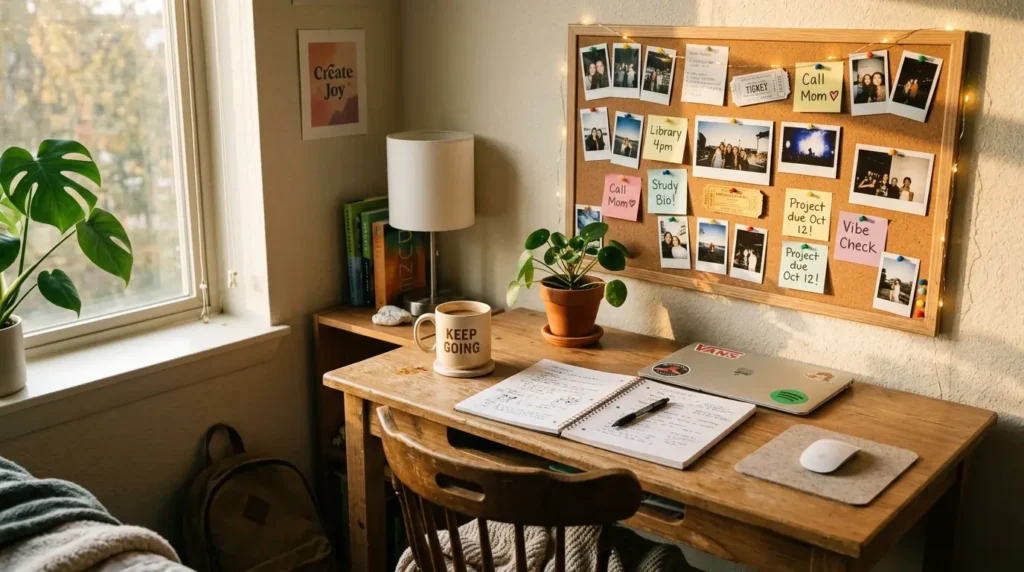
Whether you’re applying to colleges, trade schools, scholarships, or jobs, people are going to ask for a resume. Trying to remember every club you joined, award you won, or volunteer hour you completed over the last three years is a nightmare.
How to do it right now:
- Open a Google Doc and title it “My Brag Sheet.”
- Jot down everything you’ve done since freshman year. Did you walk dogs at the shelter for a weekend? Write it down. Were you the treasurer of the anime club for a semester? Put it in.
- Update this document at the end of every semester. When it comes time to fill out the Common App or ask a teacher for a letter of recommendation, you just hand them this doc. It saves you hours of panic and makes you look incredibly professional.
4. Treat Sleep Like a GPA Requirement
This is one of the most important back to school tips for high school seniors: hustle culture is dead, and pulling all-nighters is not a flex.
In high school, you can maybe get away with running on 4 hours of sleep and a Monster Energy drink because you’re sitting in a desk from 8 AM to 3 PM. In college, that level of exhaustion will destroy your immune system and your grades.
How to do it right now:
- Set a strict cutoff time: Pick an hour (say, 10:30 PM). When that time hits, you stop working. No matter what. Whatever isn’t done just isn’t done.
- Protect your mornings: Give yourself at least 45 minutes before you have to leave the house. Rushing out the door with wet hair and a pop-tart spikes your cortisol and ruins your focus for the first half of the day.
5. Start Networking with Your Teachers (Seriously)
I know, talking to teachers outside of class sounds terrifying. But in college, “Office Hours” are where the actual magic happens. Getting comfortable speaking to adults who hold authority over your grades is a massive part of the high school to college transition.
Furthermore, you are going to need glowing letters of recommendation very soon.
How to do it right now:
- Find two teachers: Identify two teachers whose classes you genuinely enjoy or who you feel comfortable around.
- Ask smart questions: Stay 2 minutes after class to ask a question about the lecture, or ask for their advice on a project.
- Show up: If your high school has tutorial periods, office hours, or study halls hosted by teachers, go to them. Let them see your face and know your name. When you ask them for a rec letter in October of your senior year, they’ll actually have something personal to say about you.
6. Learn to Manage Your Own Money (The Basics)
If your idea of budgeting is checking your bank app and praying the number isn’t negative, we need to talk. Financial independence hits like a freight train in college. You’re suddenly responsible for textbooks, groceries, late-night pizza runs, and maybe even rent.
If you want to know how to prepare for college in high school, start treating your money with respect right now.
How to do it right now:
- The 50/30/20 Rule: If you have a part-time job or get an allowance, practice splitting it. 50% for needs (gas, car insurance), 30% for wants (Starbucks, movies), and 20% straight into savings.
- Track your spending for one month: You don’t have to change how you spend yet, just track it. You’ll be horrified by how much you drop on fast food or iced lattes. Awareness is the first step to fixing it.
7. Automate Your College & Scholarship Hunt

Applying for colleges and scholarships can feel like taking on a second full-time job. It’s overwhelming, and it’s the main reason upperclassmen burn out by Thanksgiving.
You need to systemize this process so it doesn’t take over your entire life.
How to do it right now:
- Create a separate email address: Make a clean, professional email (e.g.,
firstnamelastname@gmail.com) strictly for college apps, College Board, and scholarships. This keeps your personal inbox clean and ensures you don’t miss important deadlines. - The 1-Hour Rule: Dedicate just one hour every weekend to college prep. Use this hour to research schools, write one paragraph of an essay, or apply for one micro-scholarship on sites like Bold.org or Going Merry. Small, consistent steps beat frantic 3 AM panic-writing every time.
8. Practice the Art of “Strategic Quitting”
Colleges do not want to see that you were a member of 14 different clubs but did absolutely nothing in any of them. They want to see depth, not breadth.
One of the hardest lessons of the high school to college transition is realizing you can’t do everything. Spreading yourself too thin leads to mediocre results across the board.
How to do it right now:
- Do an audit: Look at all your extracurriculars. Which ones do you actually care about? Which ones are you just doing because it “looks good on an application”?
- Cut the fluff: Drop the 2-3 activities that drain your energy and provide no joy. Take that time and invest it heavily into the 1-2 things you are actually passionate about. Try to get a leadership role in those remaining activities. That looks way better to admissions officers.
9. Let Yourself Still Be a High Schooler
Amidst all the college readiness tips for high schoolers, please remember this: you are still a teenager.
Yes, the future is important. Yes, your GPA matters. But you will never get this specific time in your life back. Do not spend your entire junior and senior year living in the future, stressing over a college you haven’t even been accepted to yet.
How to do it right now:
- Go to the cheesy football games.
- Take pictures on a digital camera with your friends.
- Have movie nights where you don’t talk about the SATs or college applications.
- Give yourself permission to just exist exactly where you are. College will be there when you graduate.
The “Magical College Motivation” Myth

Let’s have a quick reality check. A lot of high school upperclassmen secretly believe that once they get to college, they will magically transform into an aesthetic, highly productive, straight-A student who wakes up at 6 AM to do pilates.
Spoiler alert: You won’t.
College does not fix your procrastination. If anything, the lack of structure makes it ten times worse. If you leave your homework until 11:59 PM right now, you will do the exact same thing in your dorm room next year. The habits you build today are the habits you take with you. Stop waiting for a magical change of scenery to fix your time management. Start small, right now, with just one of the tips from this list.
Key Takeaways
- Your calendar is your boss: Pick one system (like Google Calendar) and time-block everything to prepare for the unstructured freedom of college.
- Study smarter, not prettier: Ditch passive highlighting for active recall and spaced repetition.
- Document your wins: Keep a running “Brag Sheet” for easy resume and rec letter building.
- Sleep is non-negotiable: Set a hard cutoff time for homework to protect your health.
- Quality over quantity: Drop the clubs you don’t care about and focus on leadership in the ones you do.
- Don’t forget to live: Balance the college prep with actually enjoying your last years of high school.
FAQ: The High School to College Transition
1. When should I realistically start applying for colleges? If you’re a junior, start researching and building your list in the spring. Over the summer before your senior year, start drafting your main Common App essay. If you do this, you can hit the ground running when applications actually open in August/September.
2. Is senioritis actually real, or am I just lazy? It is 100% real, and it’s basically just academic burnout. You’ve been running a marathon for nearly four years. The best way to combat it is not to force yourself to work harder, but to lower the friction. Break big tasks into ridiculously small, 10-minute steps.
3. Do colleges care more about GPA or extracurriculars? Your transcript (GPA and the rigor of the classes you took) is almost always the most important factor. However, a solid GPA combined with strong, dedicated involvement in 1-2 extracurriculars (where you show leadership) is the golden ticket.
4. How do I stop procrastinating when I have zero motivation? Stop relying on motivation, it’s a feeling, and feelings change. Rely on systems. Use the “2-Minute Rule”: if a task takes less than two minutes, do it immediately. If it’s a big task, tell yourself you will only work on it for 5 minutes. Usually, just starting is the hardest part.
5. How hard is the transition to college academics? It’s an adjustment. You spend less time in class, but you are expected to do a lot more reading and learning on your own outside of class. That’s why building self-discipline in high school is the ultimate cheat code.
Conclusion
The high school to college transition doesn’t have to be a nightmare of anxiety and cramming. By treating your junior and senior years as a training ground rather than just a waiting room, you set yourself up for massive success.
You don’t need to implement all 9 of these back to school tips for high school seniors overnight. Pick one today. Start time-blocking your calendar or set a strict bedtime tonight.
You’ve got this. Take a deep breath, do the work, and don’t forget to actually enjoy the ride.
Got a favorite tip from this list? Save this post to your High School Survival Pinterest board so you don’t lose it!